All posts by TheNextBallav

A little glimpse into my inner universe.

Dancer – Creator or Interpreter? (2/2)

Driven by choice

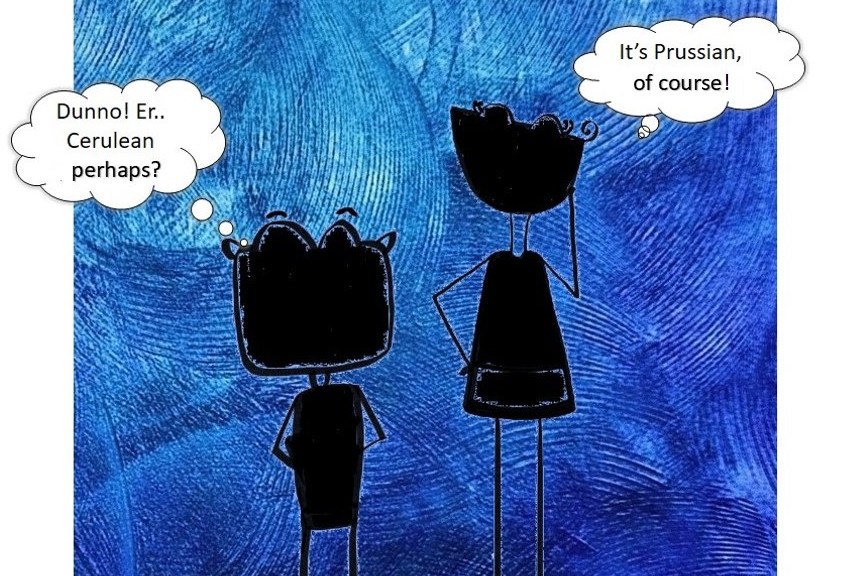
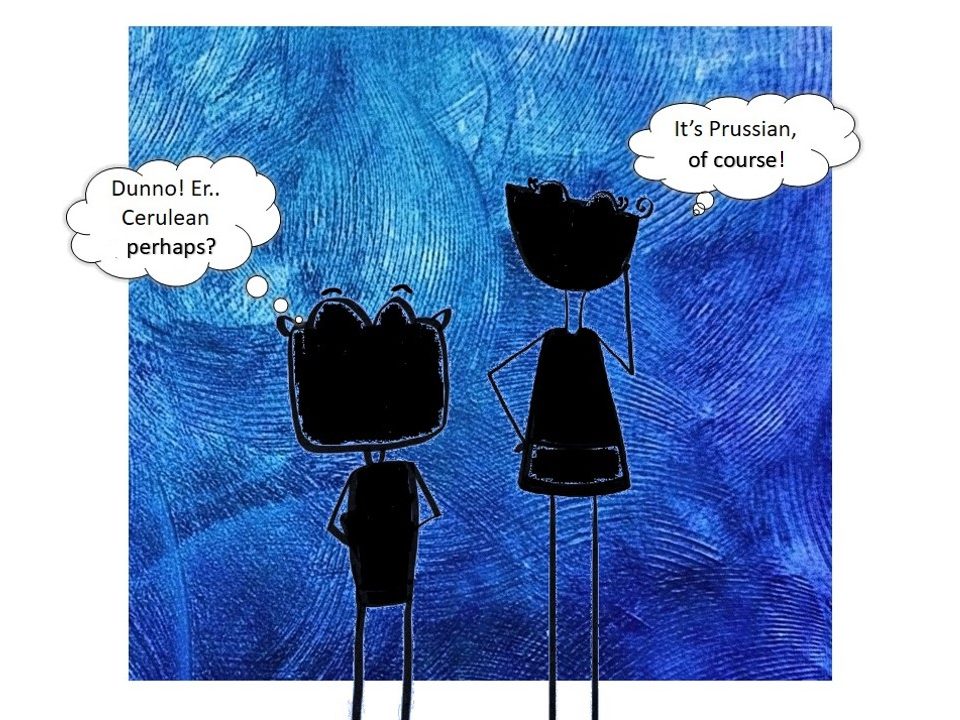
Art revels in its preference- and perspective- driven identity. It is dictated by choice. Choice made by whom, one may ask? Quite easily, all those involved. Much like what Mahati and Manasvini said, an interpretation is the articulation of an internalized experience, and is therefore highly subjective. In a painting, one sees a shade of blue. The painter, when he was painting it, identified it as cerulean blue. On the other hand, a viewer thinks it to be Prussian. Who is right? More interestingly still, does only one of them have to be? What definitely counts for an aware and informed discussion about the understanding of what this shade of blue is, is how dispassionately and convincingly both sides can present personal stances and justify their answers. This is not unlike the dancer choosing to be either a creator or an interpreter at a given moment (or even choosing to be a bit of both). Similarly, a member of the audience may see an independent creation, or see an interpretation of the musical or lyrical content while witnessing a presentation.

Another thought that comes to mind here is the default bias that audience members exercise thanks to their individual life experiences. Remember the small clip we shared of Kelucharan Mohapatra ji (Newsletter Issue 2 – Dance – Infinite in the moment?) performing a piece of Abhinayaa to Jayadeva’s Geet Govindb? Through his Abhinaya, he created a Vrindavanc of great beauty. He likely used images from his environs to inspire the movement and mood he painted on stage. Here’s some food for thought: When all of us watch it, do we see the exact Vrindavan Kelu ji’s mind’s eye must have seen? Do we see trees and creepers and a smiling Krishna just the way he imagined it? Not really. We inherently add our own twist to it, without consciously meaning to. He leads us into an intellectual and emotive space that is intrinsically enmeshed with our visual memories. Remember the dense bougainvillea creepers that sit draped on your neighbour’s wall? When Kelu ji gracefully twirled his hands as if to mimic a dainty creeper, your mind might have ambled back to them. And Jayadeva? He had probably envisaged it very differently, which he subsequently captured in words. With so much room to create and absorb an incident idea, how each of us translates, interprets and reflects it is quite a complex and nuanced phenomenon to appreciate.

In a painting, one sees a shade of blue. The painter, when he was painting it, identified it as cerulean blue. On the other hand, a viewer thinks it to be Prussian. Who is right? More interestingly still, does only one of them have to be?

An extended consciousness

Does the identity of the dancer oscillate like a pendulum between two distinct states of creation and interpretation which remain perpetually non- convergent? Or are all his/her phases, whether transient or long lasting, existent within an ever-expanding spectrum of his/her state? 

An interesting leitmotif that kept emerging from our speakers at the Dance Debates was the curious idea of self-reflection. At any random minute in a dance recital, the dancer finds him/herself coexisting in different states of mind. ‘Do I remember how the next Nrittad sequence commences? Has my eyeliner started running because of the sweat?’ These are some of the more concrete, accessible (and dare I say, objective) questions that make the rounds in the dancers’ heads. Slightly trickier ones are those that pose a challenge even at the articulation stage. ‘When I play a Nayikae, do I become her? Or do I briefly inhabit her skin, and emote what she feels because I seem to understand her character?’ Even more difficult is to determine for oneself where these two previous questions diverge. And that is precisely the same struggle with the creator/interpreter conundrum. ‘I seem to exist and operate at various points across a wide range with these two as its extremes, without really knowing for sure what measure of my current state identifies as one or the other’. Finally, there is the rather indescribable, visceral knowledge that our questions surrounding the state of creating/ interpreting are just a fraction of a bigger whole consisting of questions surrounding emotional and objective states, and spatial, literary and musical awareness amongst others.

Metaphor x Metonymy

The concept of a metaphor strongly drives the interpretative character of dance. We reference a relatively unknown object to something that we were previously well familiar with. Think of a dancer portraying an elephant on stage. Going back to what Manasvini and Mahati spoke of in the Dance Debates, the aspect of imitating that which we see around us (Anu Karana) and presenting it through the medium of our physical bodies on stage is a big part of dance.  When we see a dancer portray characters, human emotions or tendencies we recognize from our lives outside of the auditorium, we experience the metaphor-centric, interpretative identity of a dancer. The dancer is evoking a memory-based cue from the viewers, thereby encouraging them to draw a similarity. He/she will then progress the narrative with the assistance of this evoked cue. 

In his seminal work in linguistics, Roman Jakobson stated his belief that language was basically bipolar in structure, and oscillated between the poles of metaphor and metonymy. This helped personally concretize two ideas: one, that dance is essentially language; and two, that it too, oscillates between the states of creation and interpretation at all times.

In contrast, a metonymy is more of a self-reference. A small part of a larger concept is highlighted and recognized as an identifying factor of that concept. Just a mention of this is enough to represent a wider or larger concept. 

To elucidate an example, let’s think back to a section of ‘Millennial Adavusf’, a lecture demonstration that we had shared previously (Newsletter Issue 2 – Dance – Infinite in the moment?). The choreography of a jatig for a production based on the life of Lord Krishna sees artists Shweta Prachande and Apoorva Jayaraman weave in movements that are reminiscent of dance steps seen in a typical Raas Leelah. They do not transform the jati completely into a Raas Leela – like sequence. Instead, they retain the grammar of the Bharatanatyam form and employ traditional hastasi and adavus to lend even the Nritta a hint of the theme of the literature handled in the verse. The jati, like any other, is devoid of verbal meaning, and is purely a rhythmic structure. But by the intelligent use of inspired movement, the dancers use the otherwise pure dance sequence to maintain a continuity of the literary theme. Does the jati share a proximity with some Raas Leela derived movements? Yes. But this isn’t coincidence, and nor is it deliberately orchestrated. This is proven when we ask ourselves whether we would have gleaned the Raas Leela connection in this jati had we not been made aware of it expressly. Even if we were unfamiliar with the concept or visual representation of a Raas Leela, the jati would have made aesthetic sense from a pure, standalone Bharatanatyam perspective. And secondly, it would have evoked a sense of merry making and fun, which is what the Raas Leela is essentially all about. That is the metonymy in dance. And it speaks of the creator in the dancer because the inspiration to augment even the seemingly disconnected parts of a piece with the fragrance of meaning comes from within.

In his seminal work in linguistics, Roman Jakobson stated his belief that language was basically bipolar in structure, and oscillated between the poles of metaphor and metonymy. This helped personally concretize two ideas: one, that dance is essentially language; and two, that it too, oscillates between the states of creation and interpretation at all times.

Einstein said, “After a certain high level of technical skill is achieved, science and art tend to coalesce in aesthetics, plasticity, and form. The greatest scientists are always artists as well”. Only when we know the grammar, science and the beautiful multiplicity of our identities can we hope that art flows from and through us. It is only then that we can hope to become simultaneously, both the artist and the art.

Dance Debates Episode 2 – Dancer : Creator or Interpreter?

GLOSSARY

a. Abhinaya: Literally meaning "to carry forward", abhinaya is the craft of narrative and emotional communication through the use of facial expressions, hand gestures, body language, lyrical and musical content, and costumes. 
b. Geet Govind: The Geet Govind is a work composed by the 12th century Hindu poet, Jayadeva (Britannica, T. Editors of Encyclopaedia (2013, June 27). Gītagovinda. Encyclopedia Britannica. )
c. Vrindavan: A town in the state of Uttar Pradesh in northern India.
d. Nritta: It is one of the three main aspects of Indian classical dance forms (the other being Nritya, or interpretative dance, and Abhinaya, or the drama element of dance). It is the primary visual distinguisher of each style, thereby helping them establish a unique movement identity. Creation of geometric patterns on the floor and in space, and definition of elaborate movements for the major and minor limbs of the human body constitute the bulk of its purpose. 
e. Nayika: A Sanskrit term used to denote the female protagonist in dance or drama. 
f. Adavu: Adavus are like the alphabets in Bharatanatyam - a set of basic movement units one is taught while starting to learn. In the way it is taught it formulates building blocks of some kind using which complex movement units are later assembled in choreographies. Read a more detailed account on Adavus by RootEd here.
g. Jati: A standalone Nritta sequence comprising of rhythmic phrases woven together into a pattern. The duration and intricacy of a jati is determined by its placement within a composition, although the intention is to offer rhythmic respite to both, dancer and audience during compositions that have high emotive and literal value.
h. Raas Leela: A folk-dance form popular in many parts of north India (Britannica, The Editors of Encyclopaedia. "rāslīlā". Encyclopedia Britannica, 17 Dec. 2013). 
i. Hasta: Hand gestures that are employed in Bharatanatyam both for aesthetic effect as well as to convey meaning. Read a more detailed account on hastas by RootEd here.
Dancer – Creator or Interpreter? (1/2)

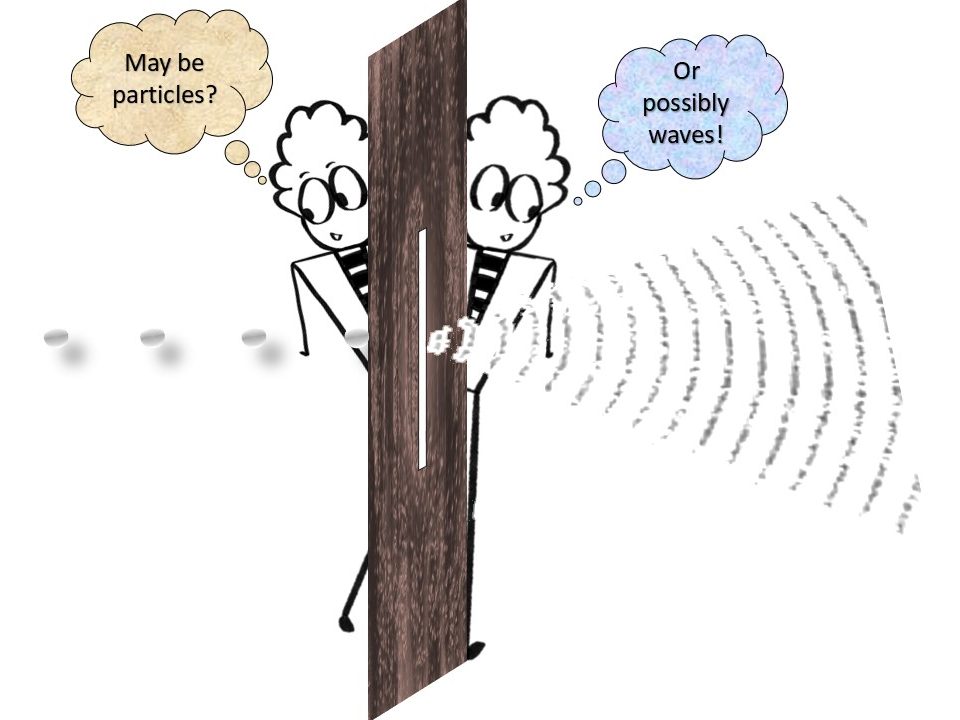
Albert Einstein, one of the greatest intellectual giants of all time, said of the nature of light: ‘It seems as though we must sometimes use one theory and sometimes the other, while at times we may use either. We are faced with a new kind of difficulty. We have two contradictory pictures of reality; separately neither of them fully explains the phenomena of light, but together they do’.

When we examine the core of the dancer’s identity hoping to settle the creator/interpreter tussle, do we eventually arrive at the same realization? We begin to ask; can the dancer be both? That is the exquisiteness of the arts, is it not, in that they do not look for accuracy and prescribe to a ‘one answer is the correct answer’ approach? That we can be dual, that art can be more than one, two, three, or a certain number of versions of a thought, is a blessing we are fortunate to enjoy.

The acceptance that light was fundamentally a form of energy remained above debate. I wondered, ‘Is it a similar story in the case of the dancer’s identity vis-à-vis the content handled?’ What is it in the arts sphere that remains undisputed? From how I see it, the belief that dance is a distilled form of human expression in all its glorious expanse remains well established. By extension, that the dancer is a communicator in the truest sense is not questioned. That dance is a radiant projection of the human experience is universal truth.

Plainly this?

One school of thought may argue that the dancer is a creator, for does he not give birth to the visual on stage? Does he not direct and lead the proceedings on stage? 

Harinie Jeevitha and Meera Sreenarayanan, in the second Dance Debates, likened the dancer to a poet. Referencing several scholars, poets, and commentators, they spoke of pratibha shakti, the imaginative power, of dancers, and how it makes them convincing and sensitive creators. They reiterated that a dancer is an inspired being, who, by will and intellect, is keen and determined to bring forth an aesthetic experience. When a dancer or poet speaks about preexisting content, the expression cannot be restricted to being called a replication. It is not only a presentation or interpretation of an idea – it is a more complex piece that involves additions from the part of the dancer by way of thought, emotion or perspective. Much like a sentence means more than the individual meanings of each of its words, a creation on the part of the dancer means more than the sole stringing of movements which carry their own independent meaning. And thus, they asked: Just because a sentence is built with words that we ‘already know’, does the sentence become ‘unoriginal’?

The purpose of dance is to give birth to aesthetic pleasure or rasa1. The person enjoying it is a Sahridaya2. The dancer therefore, also has to shoulder the responsibility of creating a Sahridaya. Art bears the responsibility of creating audiences with a refined taste. With this goal in mind, dancers create a space where art may be experienced sans interruption. They convene a ‘court’ where the larger, collective voice of the human mind is heard.

The pair closed their opening remarks with inspired words. They mused that the process of creation is rather mysterious because the dancer dissolves the self in the process of creation. Creation happens in an unconscious, unidentifiable moment. On the one hand, dancers are both creators and creations that emerge from the artistic process. On the other hand, they are neither.

..the process of creation is rather mysterious because the dancer dissolves the self in the process of creation. Creation happens in an unconscious, unidentifiable moment. On the one hand, dancers are both creators and creations that emerge from the artistic process. On the other hand, they are neither.

Or that?

The other school of thought counters and says that the dancer is merely a medium for the written word to take visual form. Had the words and the ideas not been laid out previously (conceptually and lyrically) by the composer, what would the dancer have painted on stage? 

Mahati Kannan and Manasvini K.R. chose to ponder over what it is that artists really do when they convey a thought through performance. They asked, ‘When artists depict a certain character, do they not interpret it from their perspective- as opposed to portraying exactly what the original creator had imagined?’ 

The duo went on to highlight two crucial reasons why one might be tempted to regard the dancer as wholly an interpreter. To supplement the first, they pointed out that a dancer presents imitations of life on stage. Since it is not possible to physically transport a certain concept or being to the stage, the dancer interprets visually that which is to be spoken about. The dancer does not stop merely at interpretation (Anu Karana3); there is a certain level of glorification (Anu Keerthana3) that accompanies the portrayal of ideas on stage. The glorification arises from a need to stress upon certain characteristics of a concept which did not necessarily exist in the past. Both Anu Karana and Anu Keerthana are vital for effectively communicating the central thought to the audience. Doing this honestly remains the foremost responsibility of dancers, since all artistic endeavour ultimately adds to a larger pool of tradition. Tradition is uniquely beautiful; in that it is ever whole but always elastic and benevolent enough to embrace newer additions. 

The team brought up how sometimes the interpreter is so good that their work is regarded as better than the original. Shakuntala4 by Kalidas is vastly different from the one which is found in a chapter of the Mahabharata. The mastery with which he has written his Shakuntala compels one to recall this interpretation rather than the original. Mahati posed a thought- provoking question: In a scenario where the interpretation is remembered more frequently thanks to its popularity and lucidity, does the interpreter then become stronger than the original poet?

Next, Manasvini observed that interpretations are, by and large, commentaries. The bestowing of a format to better decode original, old content constitutes a large part of interpretation. It is a tool to better understand the art of the past in order to make it legible, understandable and relatable. Interpretations offer new ways to look at the old, offer new meanings and dimensions, and are ever-continuing, alive processes. What is interpretation today will find a place in traditional reserves of knowledge tomorrow.

Indian traditional arts also carry an inborn tendency to attribute any piece of work that arises from artists not to the artists themselves, but to the divinity that oversees the universe. This is done in part to reinforce humility in the artist, and in part to acknowledge the undefinable moment of pure inspiration in the lead up to an artistic eureka moment, she concluded.

Both the sides of a dancer’s persona therefore, are imperative to who the dancer wants to ultimately become: a storyteller, an enthraller, a conversationalist; but above and beyond these, a gifted narrator of the human experience. They are consequently both creators and interpreters. They assume the role of creator for that wisp of time where the visual is being referenced. Why? Simply and profoundly because theirs is the physical presence sculpting a graphic. A split second later they are interpreters. Why? Because they have processed human emotion that they have felt firsthand (or contained within a piece of music or literature), and have later honed the capability of voicing so that it reverberates in the hearts of anyone watching them.    

Dance Debates Episode 2 – Dancer : Creator or Interpreter?

GLOSSARY

1. Rasa: (Sanskrit: ‘essence,’ ‘taste,’ or ‘flavour,’ literally ‘sap’ or ‘juice’): The Indian concept of aesthetic flavour, an essential element of any work of visual, literary, or performing art that can only be suggested, not described (Britannica, T. Editors of Encyclopaedia (2015, October 1). rasa. Encyclopedia Britannica. Read more here. ). 
2. Sahridaya: The ideal spectator in Sanskrit drama. Literally ‘one of similar heart’, the sahridaya identifies closely with the representation of particular states of emotion (Rajagopalan, L., & Bharucha, R. (2003). sahridaya. In The Oxford Encyclopedia of Theatre and Performance: Oxford University Press). 
3. Anu Karana, Anu Keerthana: Very superficially, the imitation and glorification of certain characters and ideas on stage. For an in-depth read, refer to The Concepts of Anukarana, Anukirtana and Anudarshana in Abhinavagupta's Theory of Aesthetics by R. K. Shringy.
4. Shakuntala: Abhijnanashakuntala (“The Recognition of Shakuntala”) a Sanskrit drama by Kalidasa composed about the 5th century CE that is generally considered to be one of the greatest Indian literary work of any period. 

Inclusivity (3/3)

As audiences, we bear responsibility too!

And finally, we turn to the Sabha. This is where the layer of reception comes into play. Nandikeshwara, in his Abhinaya Darpana describes what a fertile audience should be like. The audience according to him, is a blissful amalgamation of informed and aware members, scholars, and well-read, curious minds. Do we have certain responsibilities as an audience in making the arts more inviting and accepting, too? Yes, unquestionably so. Much like we answered this for the artistes’ side of the story, we ask: What do we do as an audience, that creates a safe space for diversity to thrive?

By holding off from jumping to conclusions the instant we struggle to grasp what the artist is attempting to convey, we automatically create a safe haven for new voices.

Surprisingly, there are some very basic things we could do: Welcome performances that touch upon uncomfortable subjects, be open to experiencing productions that are based in cultures and beliefs far removed from ours. We need to continue being willing, enthusiastic even, to witness work that is sourced from dissimilar backgrounds from ours. By holding off from jumping to conclusions the instant we struggle to grasp what the artist is attempting to convey, we automatically create a safe haven for new voices. The list is populated with several such rather simple asks.

As a medium hoping to bridge the artist-audience gap, today we ask you, our audience: Is it always necessary to see motifs of what is happening currently around us also on the stage, in a dance composition? Can we not appreciate dance, first and foremost, simply as a medium that embodies the philosophy of an ancient people – moving records of history, if you will – and carries forward embodied knowledge and memory.  

When the many tributaries of beliefs and practice, spoken and written word will converge into a unified body, inclusivity will no longer remain a vague goal all of us are chasing- it will be reality, as natural as the sun rising in the east. While the execution of every demanding task is much more challenging than simply ideating towards it, it unfurls by drawing strength from collective intention and conviction- something I truly believe we have no dearth of in our community.

Dance Debates Episode 1: Is the present Bharatanatyam repertoire inclusive enough?

GLOSSARY

Abhinaya Darpana by Nandikeshwara : Abhinaya Darpana is a treastise on dramaturgy authored by Nandikeshwara. 

Inclusivity (2/3)

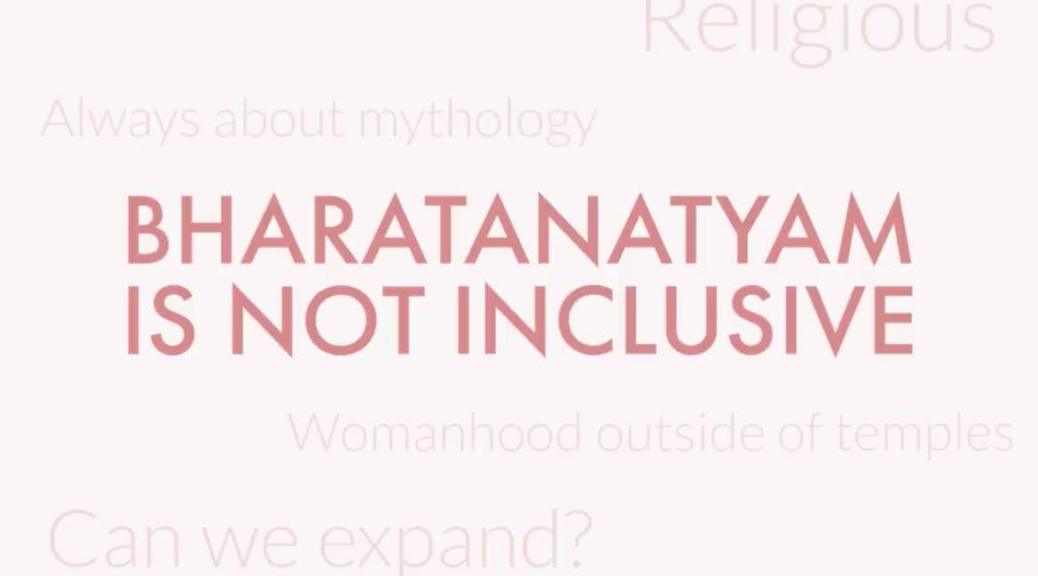
Thus is born within the delivery layer, the sub-layer of content. Simply put, ‘What are we presenting before our audiences?’ A welcoming dance community would be characterized by diverse representation of a single thought. It will be the space where text is interpreted, designed and choreographed to speak mindfully of issues that resonate with artist and audience alike. Women’s empowerment, modern history and literature, gender and identity- these are only a few of the many areas of deliberation that find strong resonance in us. Following this thread of thought, we arrive at the juncture of relevance and contemporary representation. Are we encouraging narratives that we come across ever so often every day, on the stage? 

Stories that resonate across borders

Kassiyet Adilkhankyzy, a dancer based in California, muses whether as a community, we have been forthcoming about introducing stories and narratives that may not necessarily be based in the framework of Indian mythology. Could we be talking about the lives and contributions of social reformers or inspirational contemporary figures or role models, she asks? Can we be more geography and literature inclusive? Once more, the answer lies in the affirmative, because Bharatanatyam, as a form allows for the voicing of novel thought. How this takes shape in the work we do ahead is something to excitedly anticipate.

Kuhokee Das, New York based Bharatanatyam danseuse, astutely questions how reception of non-traditional themes occurs. As she spoke about gender and inclusivity in the RootEd Dance Debate, she pondered over the audiences’ reactions to compositions that are written from the traditional gender roles perspective. How are these viewed by individuals who understand the gender spectrum differently? Do men in the audience feel like the repertoire is less accessible to them emotionally, in that it has been heavily female focussed? Would there exist enough motivation for them to sit through a recital that centres on issues like deemed primarily women- centric? It was beautiful how it was almost as if the question she had raised in the debate was miraculously heard by Parshwanath Upadhye, who recently premiered his work, ‘Suta: The birth of a father’. This production explores paternal emotion through the eyes of a Bharatanatyam artist who is himself a father, as well as through the lens of the literature that was employed in this production. The almost instantaneous voicing of a question and it being respectively answered is proof that inclusivity is being taken very seriously within the dance fraternity.

On the matter of openness and fair mindedness in dance

If we ask ourselves what a fair and impartial attitude in the dance circles looks like, it is important to first examine what our expectations from this word are. This consequently introduces the ‘how’ within the delivery layer. Adopting a bottom-to-top approach, it means we welcome questions like ‘Is Kuchipudi the same as Bharatanatyam?’, or ‘Do you have an Arangetram in Kathak?’, and not get agitated. A little further up, it might mean staying patient with some enthusiastic audience members who want to initiate conversation after a concert. Climbing ahead, it could mean that we make a genuine effort to understand the perspectives of colleagues who are experimenting with contemporary music, literature, media or movement grammar. On the flip side, it also means a reassessment of our definitions of ‘irrelevant’ or ‘passé’. 

That is being inclusive too- to be firmly convinced that we have something valuable to demand the attention of a wise audience, of a ‘Sabha’ in the truest sense of the word.

Much like the wise words of Freund, what law (or cultural practice or ‘tradition’) ultimately becomes is tested in the mills of time. It is the outcome of relentless tests of relevance, and is what stays after all the possible questions regarding its fitness for being a permanent feature in a classical vocabulary have been satisfactorily laid to rest. It logically follows that as an artistes’ community, we try and stay true to our aesthetic sixth sense, pay heed to our creative instincts, and above all, stay honest to what we want to convey through a work. It implies that we be ready to shoulder the questioning and speculative glances that come part and parcel of premiering productions that speak about sensitive and bold issues like gender discrimination, social injustice, or abuse. That is being inclusive too- to be firmly convinced that we have something valuable to demand the attention of a wise audience, of a ‘Sabha’ in the truest sense of the word.

Dance Debates Episode 1 – Is the present Bharatanatyam repertoire inclusive enough?

GLOSSARY

Kuchipudi : One of India's classical dance forms, which has its origins in the village of Kuchipudi in present day Andhra Pradesh.
Arangetram : A Tamil word referring to the official debut performance of a performing artist.

Inclusivity (1/3)

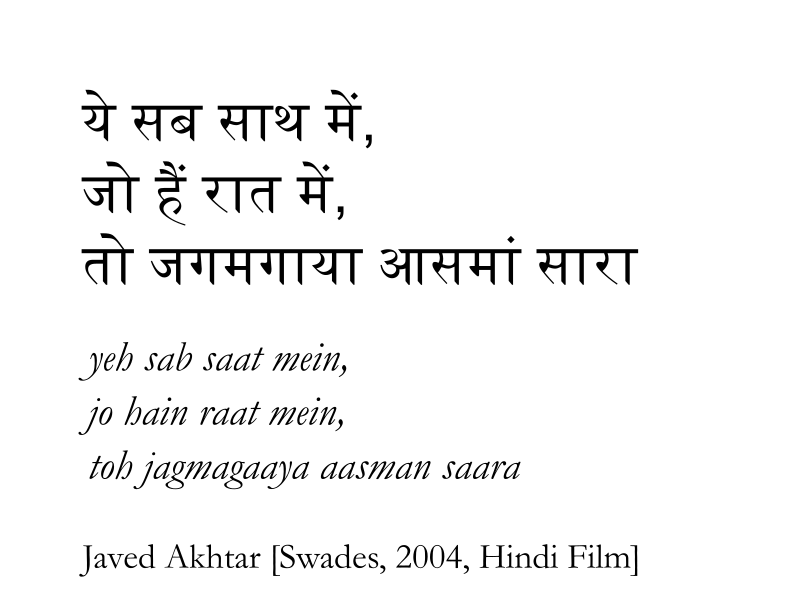
A million brilliant stars, lighting up en masse the darkness that is the night!

With so much conversation surrounding the ushering in of representation of the vast and awe-inspiring diversity that we see around us every day, inclusivity becomes not just a subject of great importance but a living, breathing component of our lives. 

“Characterized by including a great deal, leaving little out,” c. 1600, from Medieval Latin. The Middle English adjective was incluse “confined, shut in” (late 14c.). 

Inclusive: How?

We read the meaning the dictionary gives us, we comprehend the etymology, we interpret the words, we string together a sense of the word.

‘Could you share an example of how it reflects in dance?’

Faced with the question, I found myself clutching a further bunch of questions, the poorest of which (from the angle of English grammar, that is) was ‘inclusivity how?’ It isn’t for the lack of examples that most of us struggle to cite examples on the fly. It is more because there are so many layers to this word that picking an instance from any one of them is quite a challenge.

What, one may ask, are these layers that most practitioners will think of when they are posed the inclusivity question? Since our arts are highly nuanced, offering even an overview of these requires a head scratch. Broadly speaking though, it would be safe to address it on the levels of delivery and reception. As such, these become the responsibility of the artist and audience respectively, with each having their queries to one another on how they may make the entire ecosystem more wholesome rather than dissected. 

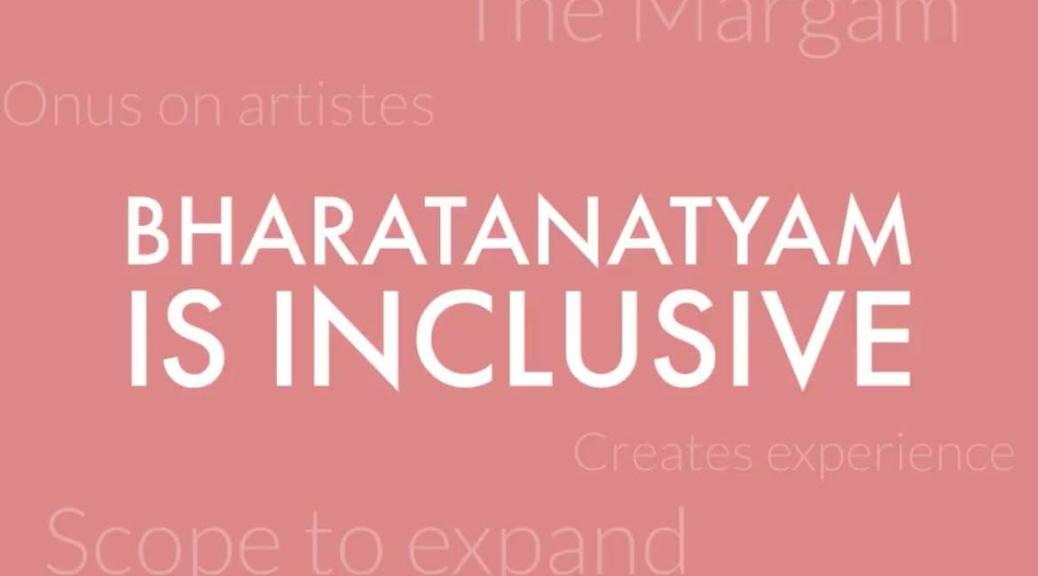
As artistes, it is initially rite of passage, and later, second nature to lean towards traditional compositions that we inherit through our schools of learning. These pieces are monuments of the thought process, stories, and value system that our nation held close to its bosom as Bharatanatyam blossomed into its current self. It becomes important to understand that content of any kind, is inspired, affected and moulded by the surroundings it was born in. The Margam crystallized into its current form primarily at the hands of, first, the Tanjore Quartet, and over time, the many, gifted Nattuvanars and Gurus of pre- and post- independent India. What we see in a traditional repertoire, therefore, is heavily influenced by the contemporary thought of the time. 

Emotion vis-à-vis its perception and representation 

The late Paul Freund, one of the most respected constitutional law scholars of the 20th century, once said that the courts of law “should never be influenced by the weather of the day but inevitably will be influenced by the climate of the era.” It would not be inappropriate to also extend these wise words to the culture of art practice. How we understand dance, drama, tradition, literature and culture is, and will be, a continually evolving process. What stays front and central to this evolution is the irrefutable fact that dance is a primal reflection of our emotive bodies. It is a joyous, fully permeable membrane of feelings. 

Over the years that it has evolved, have we unconsciously arrested the growth of this quality of Bharatanatyam? No! It remains, as ever, a dynamic tool, a paint brush that allows us to construct, to sketch our innermost sentiment. In that sense, it has always been very open and inclusive. What has determined how it has come to be perceived is the artistic choices that the dance community has made (which is to say, how certain emotions have been explored more widely and at a greater depth than others).

One belief however, remains constant: The general intention of a performance, production or Margam has been driven by Bharata’s Rasa Sutra– A satisfying dance experience is that which evokes a response borne out of emotion in the mind of a viewer. It is grand; cinematic, almost. A swelling interlude of percussion quickens our pulse as a Jatayu struggles to deter a Ravana from abducting a panicked Sita. We also find ourselves holding our breaths as we see the portrayal of a young woman walking back home alone down a lonely street in today’s time. Fazit? Bharatanatyam, of all it is and promises to be, is rudimentarily a voice of emotion. No matter where we go in the world, this will always stay relevant. 

Are we therefore (before we ask ourselves the next question), still being inclusive, in spite of the stories we most majorly portray on stage? Yes, because all humans will respond to an emotion similarly. It is interesting to hear what dancers Nitya Narasimhan and Surabhi Bharadwaj spoke about this in our very first Dance Debates.

Dance Debates Episode 1 – Is the present Bharatanatyam repertoire inclusive enough?

GLOSSARY

Margam : The word itself means 'path'. It refers to the sequence of songs/pieces that is performed as part of a solo Bharatanatyam concert today.  
Nattuvanar : In this context, the term refers to the male teachers who formed part of the ecosystem of dance during when it was still practiced by hereditary dancers. They not only conducted the performances of their pupils by providing vocal and rhythmic accompaniment, they also taught and composed dance within the system. 
Tanjore Quartet : Brothers Chinnaya, Ponnayya, Vadivelu and Sivanandam who hailed from Tanjavur/Tanjore, lived during the 19th century, and made seminal contributions to the field of Bharatanatyam and Carnatic Music. 
Guru : In this context, the term refers to the teachers of the dance form.  
Bharata : Considered the author of the ancient Indian treatise on dramaturgy - The Natyashastra, dated approximately between 200BCE and 200 CE.
Jatayu, Ravana, Sita : Characters from the Indian epic novel Ramayana.

Artling is here!

A year ago, RootEd materialized out of many inspired, curious and enthusiastic conversations between Apoorva Jayaraman and Sumathi Vikram, dancers, co-founders, colleagues, and long-time friends. They were soon joined by Ashaa Vigashini, who soon became an integral part of the team, and now heads logistics and tech support. 

It has been our endeavour to create a space where dancers and non-dancers, enthusiasts and scholars, as well as beginners and the seasoned alike find something that speaks to them. We hope to be the place a mind curious about a pataka hasta turns to, as well as the ecosystem where young dance students meditate about contemporary practices in Bharatanatyam. The past year has danced past us as we choreographed ways and means to achieve this seamless balance. We are happy to share that our efforts were met with lots of love and enthusiasm, which has compelled us to keep going. Today we turn one, and in keeping with our perennial hope to continue growing, we have something exciting to share with you!

Edited by Durga Tilak, RootEd will meet you every month in your very own inboxes through a newsletter, much like this one, what we call Artling!

What might you find in the newsletter?

Do you have to know everything about Bharatanatyam? Not for one moment! This newsletter is as much for a toddler in Bharatanatyam as it is for the initiated, learned and distinguished. This is our endeavour to provoke dialogue and exchange, question and answer, and give and take across varied echelons of dance comprehension.

The newsletter will be your doorway to all of our work, latest brainstorming (and Hasta Jamming, Coddiewompling and so on and so forth), and upcoming events. But it will also be your go-to to uncover interesting, significant and thought-provoking work in the classical dance and arts community. You will get to hear from individuals from the dance space either personally (through links to video snippets and excerpts), or by way of archival material that we recommend in the month’s takeaway. 

Keep an eye out for RootEd Recommends and RootEd’s RapidReads, two tags that will lead you to the material we will be sharing with you, and also for any hyperlinks that you will spot being woven into the textual body. 

But what you can certainly look for is a wholesome, crisp and refreshing packet of Bharatanatyam centric content that will be a welcome respite to your day; an invitation to unwind for a while and join us on an expedition through the engaging alleyways of dance and rhythm. 

To stay tuned to future issues- subscribe!