
Albert Einstein, one of the greatest intellectual giants of all time, said of the nature of light: ‘It seems as though we must sometimes use one theory and sometimes the other, while at times we may use either. We are faced with a new kind of difficulty. We have two contradictory pictures of reality; separately neither of them fully explains the phenomena of light, but together they do’.
When we examine the core of the dancer’s identity hoping to settle the creator/interpreter tussle, do we eventually arrive at the same realization? We begin to ask; can the dancer be both? That is the exquisiteness of the arts, is it not, in that they do not look for accuracy and prescribe to a ‘one answer is the correct answer’ approach? That we can be dual, that art can be more than one, two, three, or a certain number of versions of a thought, is a blessing we are fortunate to enjoy.
The acceptance that light was fundamentally a form of energy remained above debate. I wondered, ‘Is it a similar story in the case of the dancer’s identity vis-à-vis the content handled?’ What is it in the arts sphere that remains undisputed? From how I see it, the belief that dance is a distilled form of human expression in all its glorious expanse remains well established. By extension, that the dancer is a communicator in the truest sense is not questioned. That dance is a radiant projection of the human experience is universal truth.
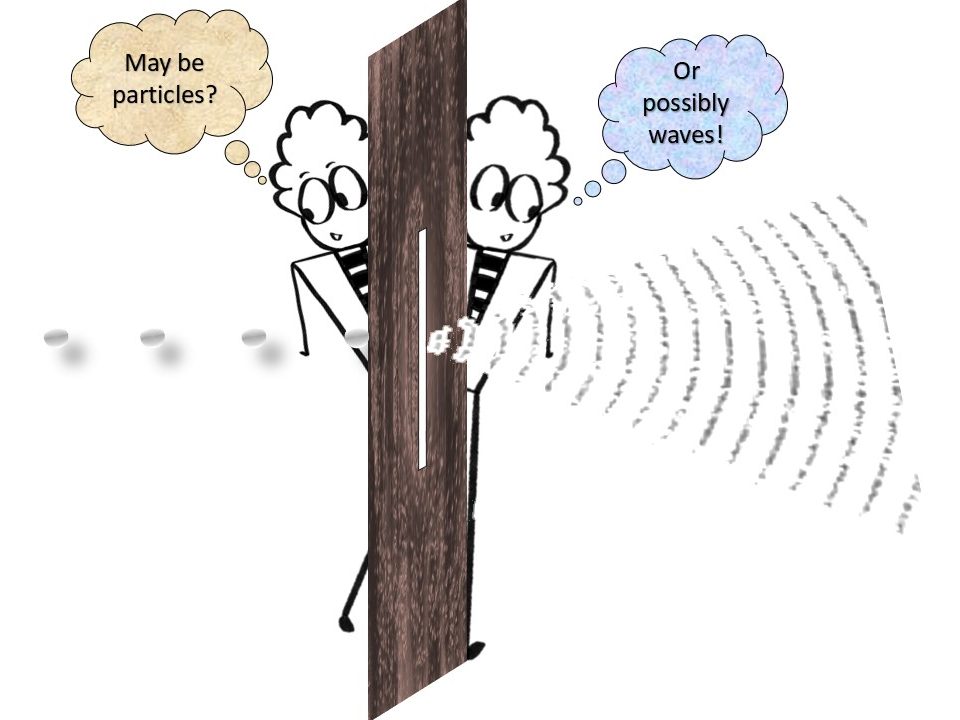
Plainly this?
One school of thought may argue that the dancer is a creator, for does he not give birth to the visual on stage? Does he not direct and lead the proceedings on stage?
Harinie Jeevitha and Meera Sreenarayanan, in the second Dance Debates, likened the dancer to a poet. Referencing several scholars, poets, and commentators, they spoke of pratibha shakti, the imaginative power, of dancers, and how it makes them convincing and sensitive creators. They reiterated that a dancer is an inspired being, who, by will and intellect, is keen and determined to bring forth an aesthetic experience. When a dancer or poet speaks about preexisting content, the expression cannot be restricted to being called a replication. It is not only a presentation or interpretation of an idea – it is a more complex piece that involves additions from the part of the dancer by way of thought, emotion or perspective. Much like a sentence means more than the individual meanings of each of its words, a creation on the part of the dancer means more than the sole stringing of movements which carry their own independent meaning. And thus, they asked: Just because a sentence is built with words that we ‘already know’, does the sentence become ‘unoriginal’?
The purpose of dance is to give birth to aesthetic pleasure or rasa1. The person enjoying it is a Sahridaya2. The dancer therefore, also has to shoulder the responsibility of creating a Sahridaya. Art bears the responsibility of creating audiences with a refined taste. With this goal in mind, dancers create a space where art may be experienced sans interruption. They convene a ‘court’ where the larger, collective voice of the human mind is heard.
The pair closed their opening remarks with inspired words. They mused that the process of creation is rather mysterious because the dancer dissolves the self in the process of creation. Creation happens in an unconscious, unidentifiable moment. On the one hand, dancers are both creators and creations that emerge from the artistic process. On the other hand, they are neither.
..the process of creation is rather mysterious because the dancer dissolves the self in the process of creation. Creation happens in an unconscious, unidentifiable moment. On the one hand, dancers are both creators and creations that emerge from the artistic process. On the other hand, they are neither.
Or that?
The other school of thought counters and says that the dancer is merely a medium for the written word to take visual form. Had the words and the ideas not been laid out previously (conceptually and lyrically) by the composer, what would the dancer have painted on stage?
Mahati Kannan and Manasvini K.R. chose to ponder over what it is that artists really do when they convey a thought through performance. They asked, ‘When artists depict a certain character, do they not interpret it from their perspective- as opposed to portraying exactly what the original creator had imagined?’
The duo went on to highlight two crucial reasons why one might be tempted to regard the dancer as wholly an interpreter. To supplement the first, they pointed out that a dancer presents imitations of life on stage. Since it is not possible to physically transport a certain concept or being to the stage, the dancer interprets visually that which is to be spoken about. The dancer does not stop merely at interpretation (Anu Karana3); there is a certain level of glorification (Anu Keerthana3) that accompanies the portrayal of ideas on stage. The glorification arises from a need to stress upon certain characteristics of a concept which did not necessarily exist in the past. Both Anu Karana and Anu Keerthana are vital for effectively communicating the central thought to the audience. Doing this honestly remains the foremost responsibility of dancers, since all artistic endeavour ultimately adds to a larger pool of tradition. Tradition is uniquely beautiful; in that it is ever whole but always elastic and benevolent enough to embrace newer additions.
The team brought up how sometimes the interpreter is so good that their work is regarded as better than the original. Shakuntala4 by Kalidas is vastly different from the one which is found in a chapter of the Mahabharata. The mastery with which he has written his Shakuntala compels one to recall this interpretation rather than the original. Mahati posed a thought- provoking question: In a scenario where the interpretation is remembered more frequently thanks to its popularity and lucidity, does the interpreter then become stronger than the original poet?
Next, Manasvini observed that interpretations are, by and large, commentaries. The bestowing of a format to better decode original, old content constitutes a large part of interpretation. It is a tool to better understand the art of the past in order to make it legible, understandable and relatable. Interpretations offer new ways to look at the old, offer new meanings and dimensions, and are ever-continuing, alive processes. What is interpretation today will find a place in traditional reserves of knowledge tomorrow.
Indian traditional arts also carry an inborn tendency to attribute any piece of work that arises from artists not to the artists themselves, but to the divinity that oversees the universe. This is done in part to reinforce humility in the artist, and in part to acknowledge the undefinable moment of pure inspiration in the lead up to an artistic eureka moment, she concluded.
Both the sides of a dancer’s persona therefore, are imperative to who the dancer wants to ultimately become: a storyteller, an enthraller, a conversationalist; but above and beyond these, a gifted narrator of the human experience. They are consequently both creators and interpreters. They assume the role of creator for that wisp of time where the visual is being referenced. Why? Simply and profoundly because theirs is the physical presence sculpting a graphic. A split second later they are interpreters. Why? Because they have processed human emotion that they have felt firsthand (or contained within a piece of music or literature), and have later honed the capability of voicing so that it reverberates in the hearts of anyone watching them.
GLOSSARY
1. Rasa: (Sanskrit: ‘essence,’ ‘taste,’ or ‘flavour,’ literally ‘sap’ or ‘juice’): The Indian concept of aesthetic flavour, an essential element of any work of visual, literary, or performing art that can only be suggested, not described (Britannica, T. Editors of Encyclopaedia (2015, October 1). rasa. Encyclopedia Britannica. Read more here. ).
2. Sahridaya: The ideal spectator in Sanskrit drama. Literally ‘one of similar heart’, the sahridaya identifies closely with the representation of particular states of emotion (Rajagopalan, L., & Bharucha, R. (2003). sahridaya. In The Oxford Encyclopedia of Theatre and Performance: Oxford University Press).
3. Anu Karana, Anu Keerthana: Very superficially, the imitation and glorification of certain characters and ideas on stage. For an in-depth read, refer to The Concepts of Anukarana, Anukirtana and Anudarshana in Abhinavagupta's Theory of Aesthetics by R. K. Shringy.
4. Shakuntala: Abhijnanashakuntala (“The Recognition of Shakuntala”) a Sanskrit drama by Kalidasa composed about the 5th century CE that is generally considered to be one of the greatest Indian literary work of any period.
 The Rooted Foundation